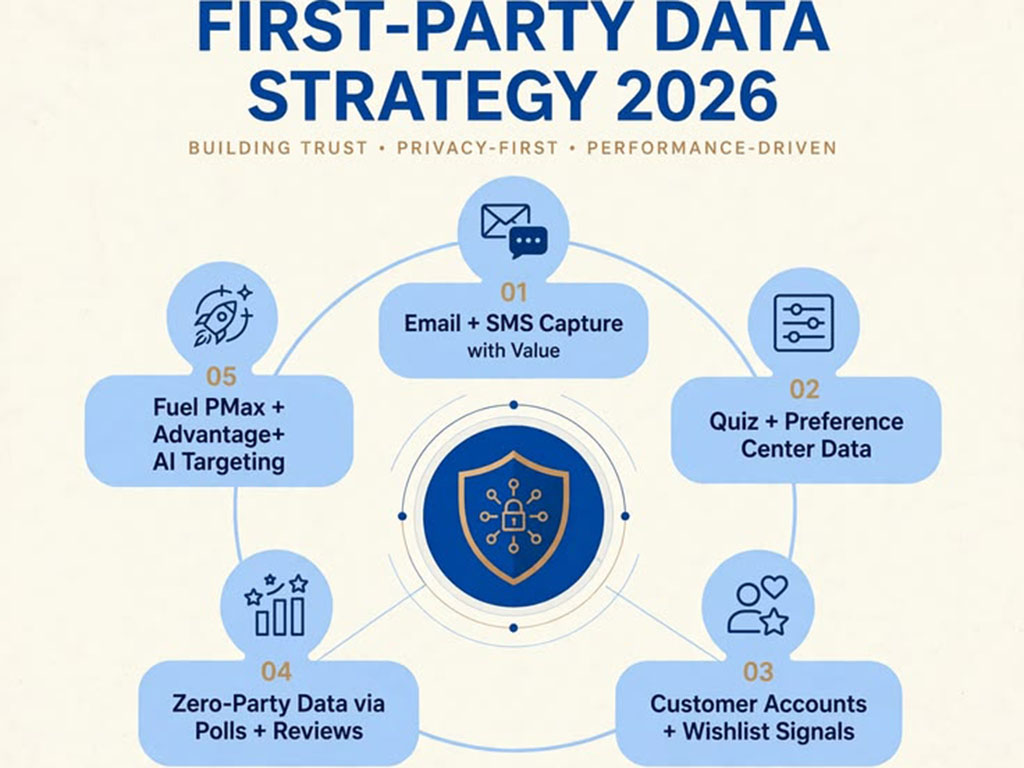
For years, digital marketing relied heavily on third-party cookies and cross-site tracking to find customers. Marketers could buy access to audience lists, follow users across the web, and target ad campaigns with remarkable ease, but that playbook is no longer effective. Browser privacy changes, widespread ad blocking, and strict regulations such as the General Data Protection Regulation (GDPR) and the California Consumer Privacy Act (CCPA) have fundamentally altered how the internet operates.
Businesses that continue to rely on outdated tracking methods are already feeling the strain. You may have noticed declining ad performance, less accurate campaign reporting, and steadily rising customer acquisition costs. When ad platforms cannot see who converts, their algorithms struggle to find similar buyers, causing your marketing dollars to work twice as hard for half the results.
But there’s a solution and it does not require an enterprise budget or a team of data scientists. The data you collect directly from your own audience, through your website, email list, transaction history, and direct customer feedback, is now your most valuable marketing asset. By building a solid first-party data strategy using the tools you already own, you can restore ad performance, deliver personalized experiences, and build a resilient business that thrives despite ongoing privacy shifts.
What Is First-Party Data and Why Does It Matter Now?
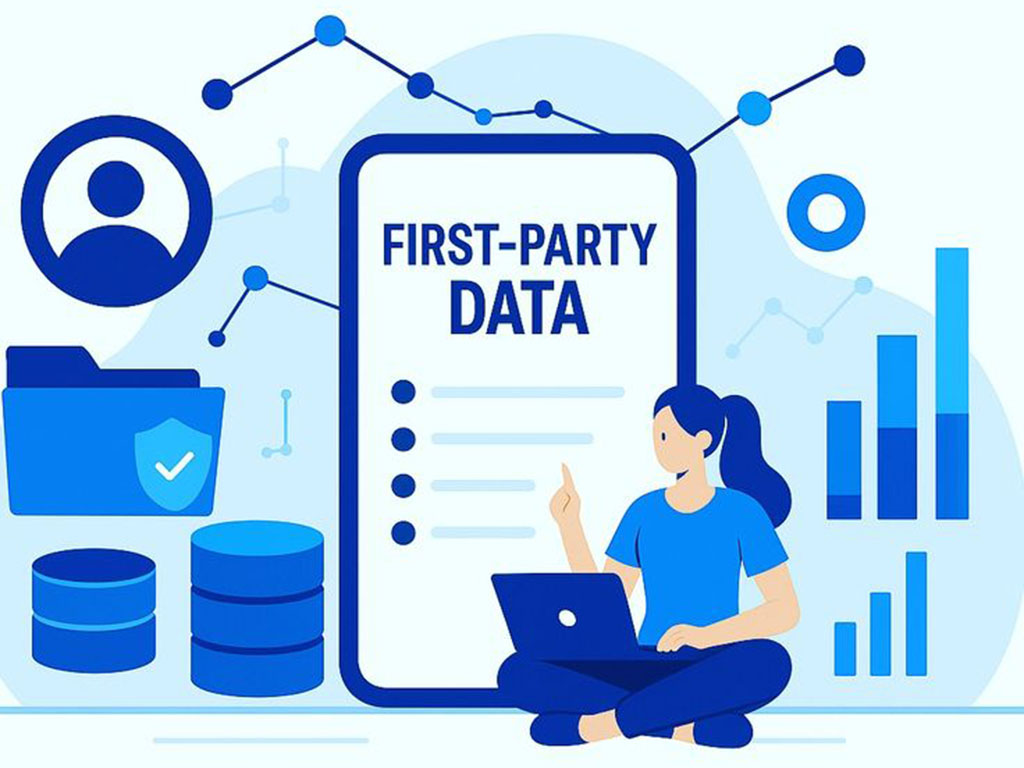
First-party data is the information you collect directly from your audience through your own interactions and channels. It includes website activity, email subscriptions, purchase history, customer service interactions, and loyalty program details. Since it comes directly from your relationship with the customer, this data is highly accurate, fully compliant with privacy laws, and entirely owned by your business.
This differs significantly from third-party data. Third-party data is information collected by outside entities that have no direct relationship with your customers. These companies aggregate behavioral data across thousands of websites and sell access to it. Many times, they are inaccurate, outdated, and subject to increasing legal restrictions.
It is also helpful to understand zero-party data. This is a specific subtype of first-party data that customers intentionally and proactively share with you. For example, quiz answers, communication preferences, style choices, and feedback form responses. Zero-party data is exceptionally powerful because it removes all guesswork regarding what your customer wants.
The year 2026 represents a critical turning point for digital marketing. Ad blockers are now used by a substantial portion of internet traffic, and nearly 40% of website visitors routinely decline cookie tracking when presented with a choice. So major technology providers have made consumer privacy the default setting across operating systems and browsers. Relying on third-party tracking is no longer a viable long-term strategy. Businesses that embrace first-party data today gain an immediate competitive advantage, resulting in better ad attribution, lower acquisition costs, and stronger customer loyalty.
Collecting First-Party Data With Tools You Already Have
You do not need to invest in expensive enterprise software or hire an outside agency to begin gathering valuable insights about your audience. The foundation of a strong data strategy relies on tools that are likely already running on your website, inside your email marketing software, or behind your cash register. The goal is simply to organize the information passing through these channels and turn passive visitor activity into intentional business intelligence.
So here are three proven methods to start collecting first-party data.
Website Behavior
Every individual visit to your website generates actionable data. By looking at the following basic analytics, you can discover what your potential customers are looking for, where they get stuck, and what content drives them to take action:
- Page Views and Navigation Paths: Tracking which services or products receive the most traffic tells you where customer interest truly lies.
- Internal Site Search Queries: The search bar on your website is one of the most underutilized data sources. When visitors type specific questions or product names into your search bar, they are directly telling you what they want to buy or learn.
- Content Downloads and File Access: When a user downloads a pricing guide, a menu, or a service brochure, they are signaling clear commercial interest.
- Click Patterns and Micro Interactions: Observing which buttons, videos, or product images receive clicks helps you understand what captures attention on a page.
Free tools such as Google Analytics 4 allow you to monitor these touchpoints without complex custom coding. By setting up standard event tracking, you can quickly identify which marketing offers generate the highest engagement and focus your budget on what actually works.
Email and SMS Engagement
Your direct communication channels are exceptionally rich sources of behavioral data. Beyond simply sending promotional messages, you can use these subscriber actions to learn about individual preferences over time:
- Open and click-through activity: Tracking which subscribers open specific subject lines or click on particular service links reveals their specific areas of interest.
- Purchase intent signals: Pay attention to what ads customers consistently open to understand immediate needs.
- Response and reply interactions: Direct text replies or email responses provide qualitative insights that quantitative numbers cannot match, helping you refine your messaging.
By tagging subscribers based on the links they click within your emails, you can automatically segment your list into smaller, highly targeted groups. This allows you to send far more relevant offers in the future, which naturally leads to higher conversion rates.
Zero-Party Collection Tactics
To gather even deeper insights, you can introduce interactive touchpoints that invite customers to share their preferences directly with you. Information that a customer explicitly and voluntarily provides is often called zero-party data. Because the customer gives it willingly, it is remarkably accurate and valuable.
Here are four simple tactics you can implement quickly:
- Interactive product quizzes: An e-commerce clothing store can place a three-question quiz on their homepage to help shoppers find their ideal fit or style. The customer receives a curated product recommendation, while the business learns the customer’s size, style preference, and budget.
- Post-purchase surveys: A local home repair business can send an automated two question survey immediately after completing a job. Asking a client why they chose your business or what feature mattered most provides instant clarity on your unique selling points.
- Email preference centers: Give your subscribers direct control over the messages they receive. Allow them to choose topic categories, content types, and message frequency so you only send content they care about.
- Loyalty and membership programs: A local restaurant can offer a ten percent discount on the next order in exchange for a customer creating an online account. Capturing birthdates, favorite menu items, and dining frequency allows for highly personalized promotional offers later on.
The fundamental rule for successful data collection is the value exchange. Customers share their personal information willingly when they receive an immediate, tangible benefit in return. Whether that reward is a discount, a customized product recommendation, or a more convenient service experience, making the trade-off clear ensures a positive experience that builds long-term customer trust.
Activating First-Party Data in Your Ad Campaigns
Gathering customer insights is only the first part of a modern data strategy. To see a true return on investment, you must feed that information back into the advertising platforms where you spend your marketing budget. In the past, advertising platforms relied almost entirely on web browser tracking pixels to record conversions and optimize ad delivery.
However, modern privacy controls, ad blockers, and mobile operating system restrictions frequently block these browser based signals.
To overcome these roadblocks, businesses are shifting to server-side tracking. Instead of relying on a user’s web browser to send data back to Google or Meta, server-side tracking sends conversion information directly from your website server or customer database to the advertising network. This secure, direct connection bypasses browser limitations and ensures that your advertising campaigns receive accurate performance signals.
Google Enhanced Conversions
Google Enhanced Conversions is a feature designed to improve the accuracy of your conversion measurement when standard tracking fails. When a customer fills out a lead form or purchases a product on your site, they provide first-party details such as an email address, full name, or phone number.
Enhanced Conversions takes this first-party data, securely hashes it using a one-way cryptographic algorithm for privacy protection, and transmits it directly to Google alongside your standard conversion tag. Google then matches this hashed data against logged-in Google accounts.
If a user viewed or clicked your ad on YouTube or Google Search before making a purchase on a different device, Google can properly attribute that sale to your campaign. Businesses that implement Enhanced Conversions typically recover between five percent and fifteen percent of conversion data that browser cookies would have otherwise missed.
Meta Conversions API (CAPI)
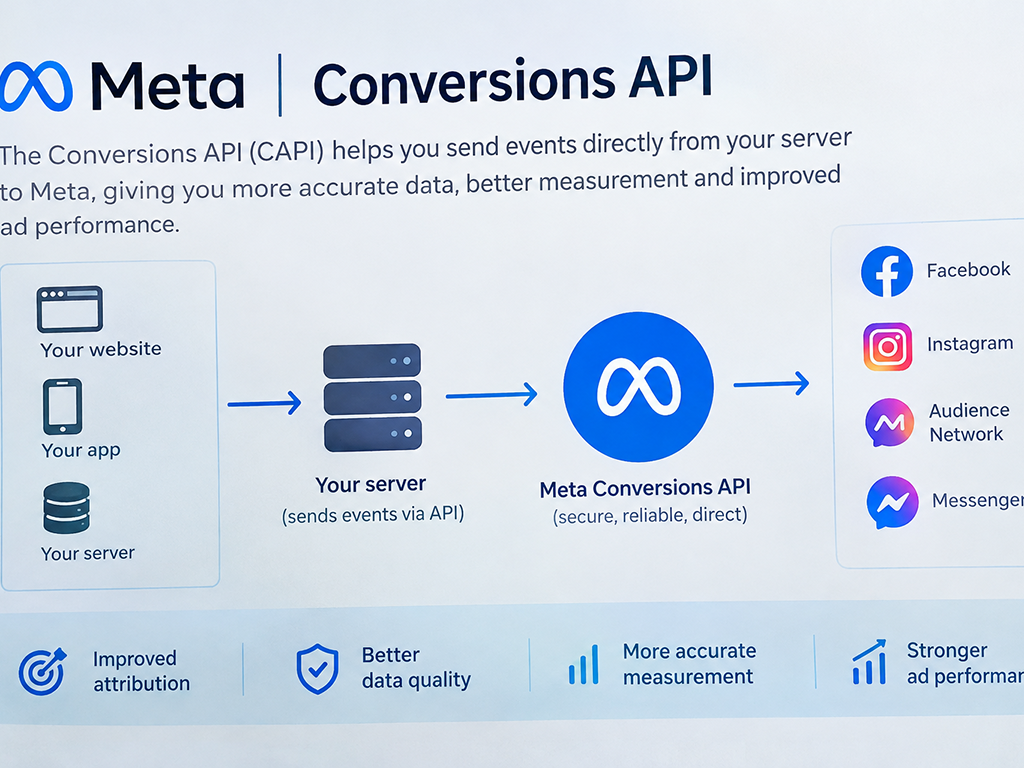
Meta Conversions API performs a similar function for Facebook and Instagram advertising. While the traditional Meta Pixel operates within the user’s web browser, Meta CAPI creates a direct server-to-server connection between your website engine and Meta advertising servers.
When a customer completes a valuable action, such as booking an appointment, submitting a quote request, or completing a checkout, your server instantly sends that event data to Meta.
By combining the Meta Pixel with Meta CAPI, you create a redundant, highly reliable measurement system. This continuous stream of verified conversion data feeds Meta’s machine learning algorithms, giving the platform the clear signals it needs to optimize ad targeting, lower your cost per acquisition, and find new prospects who match your best buyers.
Customer List Audiences
Another powerful way to activate your first-party data is by uploading encrypted lists of your existing contacts directly into advertising managers. Instead of relying on speculative demographic targeting, you can instruct ad networks to target people based on actual business relationships.
- Re-Engagement Campaigns: Upload a list of inactive customers or past buyers to run specialized promotional campaigns designed to bring them back.
- Suppression Lists: Exclude current, active subscribers from receiving acquisition ads, ensuring you do not waste ad spend showing introductory offers to existing clients.
- Lookalike and Similar Audiences: Ad platforms can analyze the shared traits of your highest value customers and automatically locate new prospects across the web who share similar behaviors and characteristics.
Action Items for Your Technical Team or Agency
You do not need to handle the technical execution yourself. You can delegate this list of specific technical requests directly to your web developer, IT provider, or digital marketing agency:
- Install Google Consent Mode v2: Ensure your website uses Google Consent Mode v2 alongside a legal cookie consent banner to dynamically adjust tracking behavior based on user consent.
- Enable enhanced conversions: Request that your team turn on Google Enhanced Conversions inside your Google Ads account and configure the web forms to capture hashed customer identifiers.
- Set up Meta Conversions API: Ask your agency or developer to implement Meta CAPI alongside your current Meta Pixel, ideally using direct plugin integrations like Shopify or Google Tag Manager Server-Side.
- Automate customer list syncs: Establish a secure monthly workflow to upload updated customer email lists into Google Ads and Meta Ads Manager, or set up an automated sync via your customer relationship management platform.
These changes aren’t as technical as they seem and once they’re implemented, you’ll notice a difference in your ads’ conversion rates.
Privacy, Consent, and Building Customer Trust
Handling data responsibly is not just a technical requirement or a legal obligation. It is a vital strategy for building long-term customer trust. Modern consumers are increasingly protective of their personal information and highly aware of how companies track them online.
Businesses that display genuine transparency regarding their data practices earn stronger customer loyalty, higher brand sentiment, and better retention rates. When customers know that you value their privacy, they interact with your business with greater confidence.
When managing privacy and compliance across your website and marketing platforms, keep these essential fundamentals in mind:
- Use clear and honest consent banners: Ensure your cookie consent banner offers visitors a simple, explicit choice to accept or decline non-essential tracking. Avoid deceptive design tactics, often called dark patterns, that pre-check boxes or make the opt-out button difficult to locate.
- Publish straightforward privacy policies: Move away from overly dense legal jargon that confuses average readers. Write a clear privacy policy that explains what information you collect, why you need it, how you use it to improve their experience, and how you protect it from unauthorized access.
- Collect only useful information: Practice data minimization by limiting your collection efforts to details you actively plan to use. Gathering excess information increases your security liability and creates unnecessary risk without adding meaningful business value.
- Provide simple data controls: Give your audience easy ways to manage their digital footprint. Allow customers to view, update, or request the complete deletion of their personal details whenever they wish, without requiring complicated verification steps.
Legal frameworks such as the General Data Protection Regulation in Europe and the California Consumer Privacy Act established the groundwork for modern data privacy standards. Today, dozens of additional United States state laws and international regulations continue to mandate strict user consent practices.
Respecting user privacy ensures full legal compliance while reassuring your audience that their personal details are entirely secure with your company. By treating customer data with care and transparency, you transform privacy compliance from a technical hurdle into a lasting competitive advantage.
A Four-Step Roadmap

Implementing a first-party data strategy does not need to happen all at once. Use this phased approach to make steady, manageable progress over the coming months.
| Timeline | Priority Phase | Action Items |
| Week 1 | Audit and planning | Map all existing data sources (website, email, point of sale, CRM). Identify tracking gaps and evaluate current consent setup. |
| Week 2-4 | Technical foundation | Deploy a compliant cookie banner with Google Consent Mode v2. Enable Google Enhanced Conversions and Meta CAPI. Launch one zero-party tactic, such as a simple post-purchase survey |
| Week 5-9 | Data activation | Upload updated customer lists to Google and Meta ad managers. Launch a second collection channel, such as an email preference center. Automate data sharing between your email software and CRM. |
| Quarterly | Review and refine | Audit collected data against actual usage to clear out unused metrics. Refresh customer list uploads in ad accounts. Test a new collection tactic and review updated privacy laws. |
Conclusion: Own Your Data, Own Your Growth
Transitioning to a first-party data strategy does not require an enterprise budget or complex infrastructure. The primary goal is steady, deliberate progress rather than absolute perfection from the start.
Every business possesses valuable first-party data. The organizations that organize this information, protect customer privacy, and actively use these insights in their daily marketing will consistently outperform competitors who remain reliant on obsolete tracking tools.
Take the first step today. Select one marketing channel or lead form on your website and complete the first week audit outlined in the roadmap. By making small, consistent updates to your data collection and advertising setups this month, you will build a dependable foundation for sustainable business growth.
Knowing how the Google Ads auction works is one thing. Spotting where your own account is wasting money is another.
That’s why I put together this Free Google Ads Audit Checklist. It’s the same process I use to review six-figure accounts: 15 checks, ranked by priority and graded so you can quickly see what needs attention.
The first check compares two numbers from different reports. On one national retail account, it uncovered 96,000 clicks that had been paid for but never delivered a sale. That’s A LOT of waste. The same thing could be happening in your account.
Open your account in another tab and give it an hour. You might be surprised by what you find.